Fuel Systems That Power Appliances Safely
Gas Line Services in Temple for appliance conversions, new installations, and aging piping that no longer meets code standards
You're adding a gas range, converting to a tankless water heater, or replacing an electric dryer with a gas model, and your home lacks the necessary supply lines to these locations. Gas line installation involves running black iron or CSST flexible pipe from your meter to appliance connection points, sizing lines to deliver adequate pressure and volume for each device's BTU demand. Flowmasters Plumbing and Drain Services LLC handles residential and commercial gas line work in Waco, including new installations, repairs to leaking connections, and full replacements of corroded piping that threatens safety. The work follows strict code requirements for materials, support spacing, leak testing, and inspection protocols that don't apply to water or drain systems.
Gas line projects start with calculating total BTU load across all appliances on the proposed line, then selecting pipe diameter that maintains minimum pressure at the farthest fixture when all appliances operate simultaneously. Runs must avoid contact with electrical conduit, maintain clearance from combustion air intakes, and include drip legs at appliance connections to catch condensation and debris. Every joint requires pipe dope rated for natural gas or LP use, and completed installations undergo pressure testing at higher-than-operating levels to verify zero leakage before gas flows.
Arrange an on-site assessment to confirm existing gas meter capacity and plan routing for new appliance connections.
Why Proper Gas Piping Installation Matters Long-Term
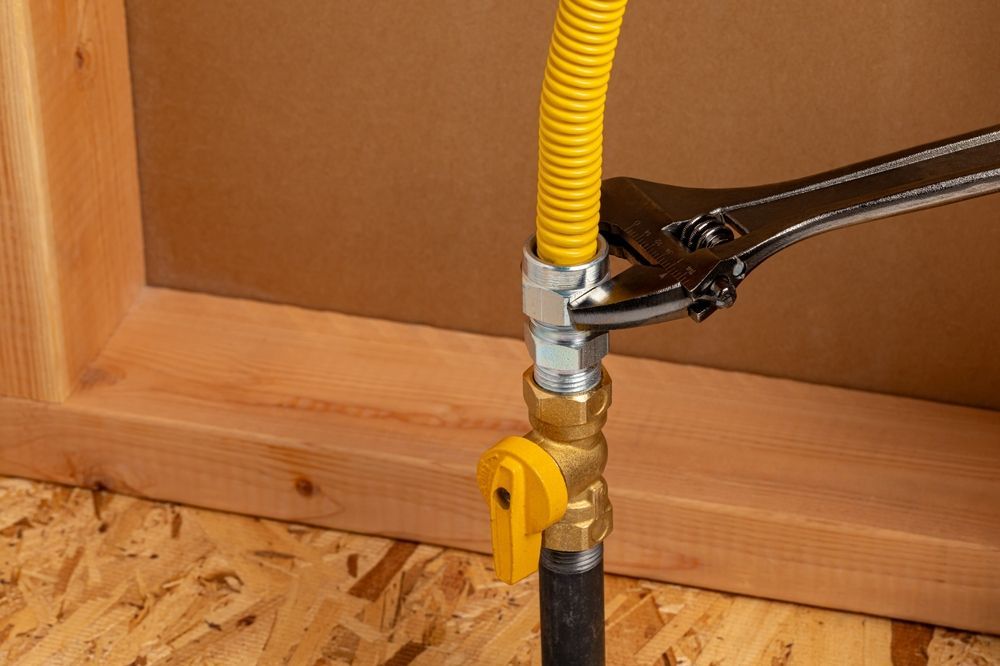
Gas line installation requires cutting and threading black iron pipe to precise lengths, installing unions at accessible locations for future service, and supporting horizontal runs every four feet to prevent sagging that creates low spots where condensation pools. CSST flexible gas lines allow easier routing through walls and around obstacles but require bonding to your electrical ground system and protection from physical damage—you can't run CSST through unconditioned attics in many jurisdictions due to lightning strike and arc-through risks. Appliance connections terminate at shutoff valves within six feet of each device, allowing isolation for maintenance without shutting down your entire gas supply.
After installation, your appliances ignite reliably without delayed lighting or weak flames, burners produce blue flame cones without yellow tips indicating incomplete combustion, and no sulfur odor appears near connections or along pipe runs. Pressure testing documentation confirms the system holds 15 PSI for a minimum of 30 minutes without measurable drop, and final inspection approval becomes part of your permit record.
Gas line services include evaluating whether your existing meter provides adequate capacity for additional appliances or requires utility company upgrade to larger orifice sizes. Undersized meters can't deliver rated BTU input to multiple appliances simultaneously, causing pilot outages and burner performance issues that mimic other problems.
What Property Owners Usually Ask
Gas line work generates questions about safety procedures, material choices, and permitting requirements that differ significantly from water supply projects.
What's the difference between black iron pipe and CSST for gas lines?
Black iron pipe offers maximum durability and requires no electrical bonding, but installation demands precise threading and rigid routing; CSST flexible lines simplify runs through walls and allow easier future modifications, but cost more per foot and require lightning protection bonding plus jacketed protection in exposed areas.
How do you size gas lines for multiple appliances?
Sizing involves totaling BTU demands for all appliances on the line, measuring the longest run distance from meter to farthest fixture, then consulting capacity charts that account for pressure drop over distance; undersized lines cause weak burner performance when multiple appliances operate together, while oversized lines waste material cost without improving function.
When does existing gas piping need replacement versus repair?
Leaking threads can sometimes be re-sealed with proper dope and retightening, but corroded pipe bodies, threads damaged from over-tightening, or galvanized pipe originally installed for water then converted to gas use all require full section replacement; any gas odor near piping warrants immediate isolation and professional leak detection.
Why do Temple gas line projects require permits and inspection?
Natural gas and LP systems carry explosion risk if improperly installed, making jurisdictional oversight mandatory for work beyond simple appliance reconnection; inspections verify proper materials, sizing calculations, support methods, pressure testing results, and clearance from electrical and combustion air sources before allowing gas flow.
What maintenance do gas lines require after installation?
Gas piping itself requires no routine maintenance, but annual appliance servicing should include technicians checking connection tightness, testing shutoff valve operation, and confirming proper burner flame characteristics; if you smell gas—a sulfur or rotten egg odor—leave immediately, avoid electrical switches, and call your gas utility or emergency services before attempting any repairs.
Flowmasters Plumbing and Drain Services LLC performs gas line installations following current code standards and coordinates required inspections as part of project completion. Contact our office to discuss appliance gas requirements and confirm whether your current meter capacity supports planned additions.